Популярное
Электроника, электрика
Журнал Радиоконструктор

Журнал Радиоконструктор

Электроника, электрика

Электроника, электрика
Электроника, электрика
Начинающему радиолюбителю
Микроконтроллеры

Электроника, электрика
Программы для радиолюбителя

Учебники
Электроника, электрика

Учебники
Электроника, электрика
Начинающему радиолюбителю
Micro-Small Fixed-Wing UAV Control: Design and Practice
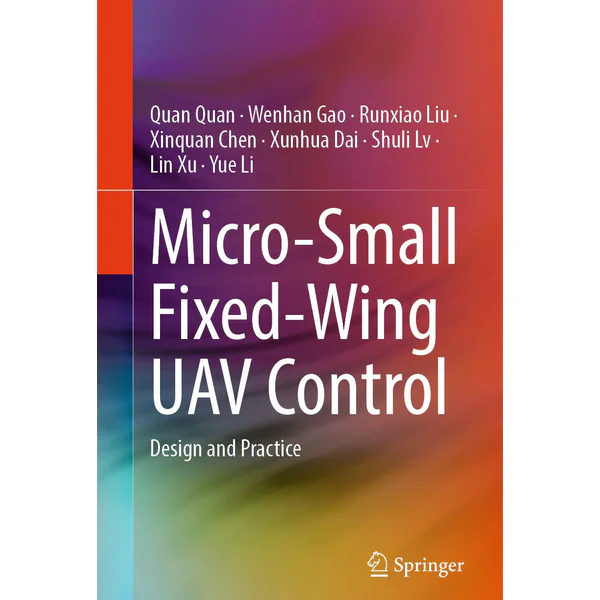
Micro-Small Fixed-Wing UAV Control: Design and Practice
Authors: Quan Quan , Wenhan Gao , Runxiao Liu , Xinquan Chen , Xunhua Dai , Shuli Lv , Lin Xu , Yue Li
English | 2026 | True PDF, EPUB | 436 pages | 101.8 MB
This book focuses on the design and development of flight control for micro-small fixed-wing unmanned aerial vehicles (UAVs). The content is progressively deepened and closely linked to current engineering practices. By conducting an in-depth study of several key themes—such as UAV design, modeling, single-machine control and planning, swarm control and planning, and the development of visual perception algorithms—this book enables readers with no prior background to grasp advanced development techniques and keep pace with the forefront of technology.
As such, it offers a valuable resource for anyone interested in micro-small fixed-wing UAVs, including students, teachers, researchers, and engineers.
To better cultivate full-stack UAV flight control engineers, we have written this book. The aim is to enable readers with zero foundation to quickly get started, master advanced development methods, and keep up with the cutting edge of technology. This book strives for foundational, comprehensive, systematic, and technically advanced aspects, focusing on breakthroughs in the following areas:
1. Rich Cases: Currently, this book includes eight theme experiments, involving level flight performance evaluation experiment, controlled dynamic system modeling experiment, system identification experiment, low-level flight control experiment, path following and planning experiment, trajectory planning and differential flatness control experiment, image-based visual servo docking control experiment, and swarm flight control experiment. Each experiment can serve as an independent case.
2. Depth and Breadth: The eight theme experiments cover UAV design, modeling, single-UAV control and planning, swarm control and planning, and also involve the development of visual perception algorithms. Each theme experiment generally includes basic experiments, analysis experiments, design experiments, and hardware-in-the-loop simulation experiments. The experiments gradually deepen and are closely connected to current engineering practice.
3. Interactivity and Practicality: All experiments include complete code. Basic experiments and analysis experiments help readers get started, while design experiments require readers to complete independently. Hardware-in-the-loop simulation experiments use autopilot hardware (CubePilot, PixHawk) to implement the entire flight control task. Readers will encounter software such as MATLAB/Simulink, Python, QGroundControl, and ground stations, as well as hardware like CubePilot or PixHawk autopilots and remote controllers, using the RflySim toolchain to achieve rapid development, deployment, and experimentation from algorithms to real machines.
4. Development Platform: This book conveys the idea and methods of model-based development, including platforms, development methods, and a series of key technologies. Based on this book, readers can further develop their own algorithms and share them, achieving up-to-date effects.
2. Depth and Breadth: The eight theme experiments cover UAV design, modeling, single-UAV control and planning, swarm control and planning, and also involve the development of visual perception algorithms. Each theme experiment generally includes basic experiments, analysis experiments, design experiments, and hardware-in-the-loop simulation experiments. The experiments gradually deepen and are closely connected to current engineering practice.
3. Interactivity and Practicality: All experiments include complete code. Basic experiments and analysis experiments help readers get started, while design experiments require readers to complete independently. Hardware-in-the-loop simulation experiments use autopilot hardware (CubePilot, PixHawk) to implement the entire flight control task. Readers will encounter software such as MATLAB/Simulink, Python, QGroundControl, and ground stations, as well as hardware like CubePilot or PixHawk autopilots and remote controllers, using the RflySim toolchain to achieve rapid development, deployment, and experimentation from algorithms to real machines.
4. Development Platform: This book conveys the idea and methods of model-based development, including platforms, development methods, and a series of key technologies. Based on this book, readers can further develop their own algorithms and share them, achieving up-to-date effects.
Contents:
1. Introduction
2. Experimental Platform Configuration and Development Process
3. Level Flight Performance Evaluation Experiment
4. Controlled Dynamic System Modeling Experiment
5. System Identification Experiment
6. Low-Level Flight Control Experiment
7. Path Following and Planning Experiment
8. Trajectory Planning and Differential Flatness Control Experiment
9. Image-Based Visual Servo Docking Control Experiment
10. Swarm Flight Control Experiment
2. Experimental Platform Configuration and Development Process
3. Level Flight Performance Evaluation Experiment
4. Controlled Dynamic System Modeling Experiment
5. System Identification Experiment
6. Low-Level Flight Control Experiment
7. Path Following and Planning Experiment
8. Trajectory Planning and Differential Flatness Control Experiment
9. Image-Based Visual Servo Docking Control Experiment
10. Swarm Flight Control Experiment
Download Micro-Small Fixed-Wing UAV Control: Design and Practice

Похожие новости

Информация
Посетители, находящиеся в группе Гости, не могут оставлять комментарии к данной публикации.
-
Зарубежные журналы
-
Радиотехнические журналы
-
Книги

